How to Test for Mold in Your Dallas Home (and When DIY Kits Fall Short)
You smell something musty in the hallway or spotted a dark patch behind the washer, and now you want answers. Here is how mold testing actually works, what you. Can do yourself, and where DIY methods hit their limits.
Start With a Visual and Smell Inspection
Before spending a dime on test kits, walk your house with a flashlight. Check under sinks, behind the water heater, around window sills, and inside closets that share a wall with a bathroom. In Dallas homes, the AC closet and the area around ductwork are common trouble spots because condensation builds up during our long cooling season.
Mold does not always look black. It can be green, white, gray, or orange, and it often shows up as staining or fuzzy texture on drywall, wood, or grout. A persistent earthy or musty odor is a strong signal even when you cannot see anything.
Take photos of anything suspicious. If you end up calling a professional, those photos help them prioritize where to sample.
What DIY Mold Test Kits Can and Cannot Tell You
Hardware store petri dish kits will almost always grow something, because mold spores exist in every home in North Texas. A positive result from a settle plate tells you very little about whether you have a problem or just normal background spores.
Surface swab kits are slightly better if you sample a visible patch, since they can confirm that a stain is mold rather than dirt or soot. What they cannot tell you is how far the growth extends. Inside the wall or whether spore levels in your air are elevated.
If you only want to confirm that a visible spot is mold before cleaning a small area yourself, a swab kit is fine. If you are trying to diagnose a hidden problem, odors with no visible source, or health symptoms, DIY kits will waste your money.
How Professional Mold Testing Works
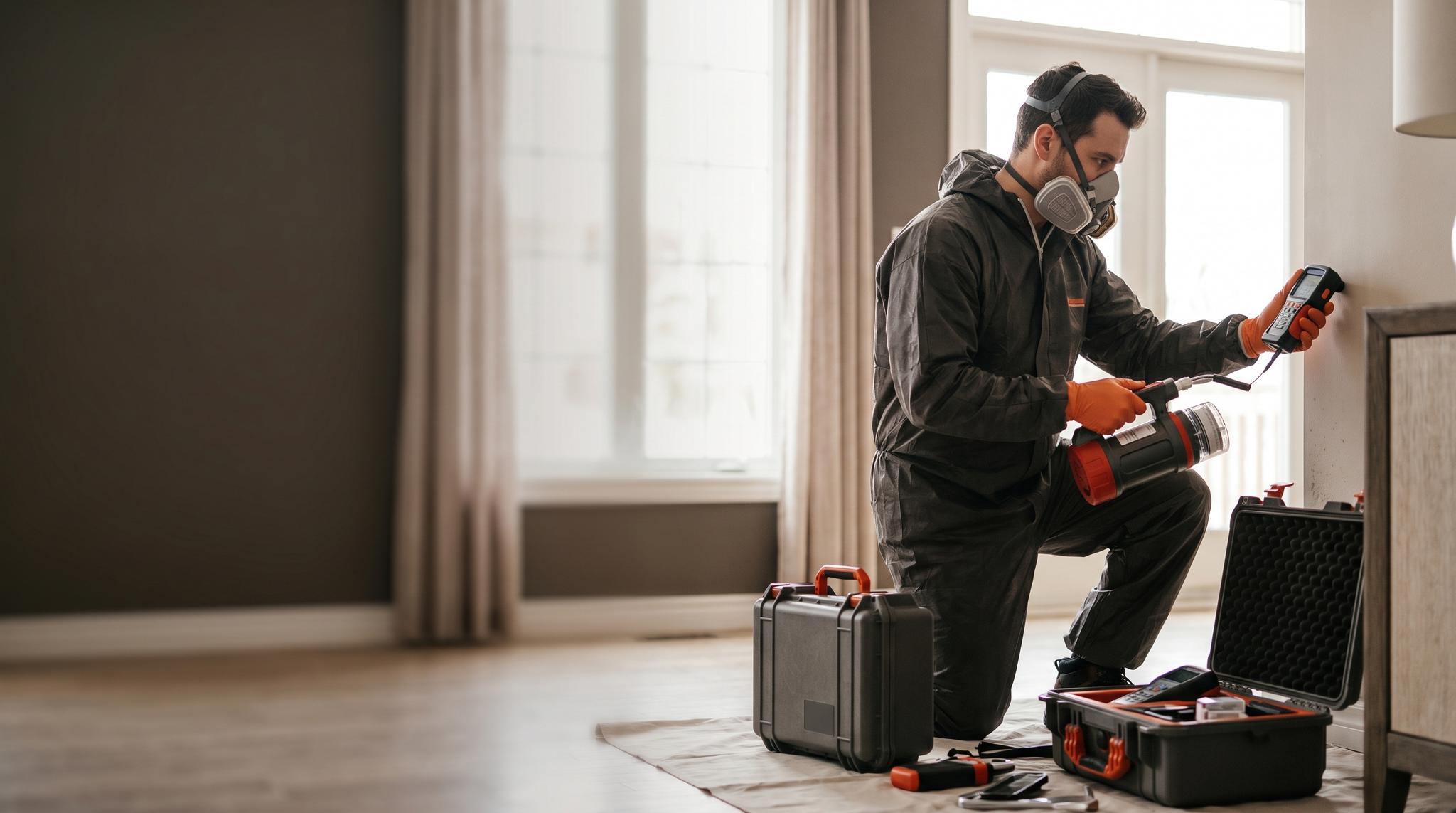
A professional inspection combines moisture meters, thermal imaging, and air sampling. Air samples are collected inside the home and outside as a baseline, then analyzed by an independent lab to compare spore types and concentrations.
This matters in Dallas because outdoor spore counts here run high much of the year, especially after spring storms. Without an outdoor baseline, an indoor reading is meaningless.
A good inspector also traces the moisture source. Mold is a symptom; the real problem is the slab leak, roof penetration, or oversized AC unit that created the damp conditions in the first place.
When to Skip DIY and Call a Pro Immediately
Call a professional if you find mold covering more than about 10 square feet, if anyone in the home has asthma, allergies, or a compromised immune system, or if the mold appeared after a flood or sewage backup.
You should also get professional testing before buying or selling a home, after any major water event even if everything looks dry, and whenever you smell mold but cannot find it. Hidden growth inside wall cavities is common in Dallas homes with slab foundations and aging plumbing.
Need a hand?
Our related services:
Frequently asked questions
How much does professional mold testing cost in Dallas?
Most professional mold inspections with air sampling in the Dallas area run between $300 and $600 depending on home size and the number of samples. Lab analysis is usually included, and you should receive a written report within a few days.
Can I just clean visible mold with bleach instead of testing?
For a small patch on a hard, non-porous surface, cleaning is reasonable. But bleach does not penetrate drywall or wood, and if you have not fixed the moisture source the mold will return. Testing makes sense when you do not know how far the problem extends.