How to Choose a Mold Remediation Company in Dallas Without Getting Burned
Mold remediation is one of the easiest trades for unqualified operators to enter and one of the costliest to get wrong. Here is how to vet companies properly under Texas rules.
Start With Texas Licensing, It Is Not Optional
Texas regulates mold work through the Department of Licensing and Regulation. For any project over 25 contiguous square feet, the company must hold a Mold Remediation Contractor license, and the technicians doing the work need their own credentials.
Just as important: Texas law requires that the company assessing the mold and the company remediating it be independent. If one outfit offers to inspect, test, and remediate as a package, that is a conflict of interest and a violation for licensed work. Walk away.
Verify licenses yourself on the TDLR website before signing anything. It takes two minutes and filters out a surprising number of companies.
Eight Questions That Reveal Competence
Ask these: Are you licensed by TDLR and can I see the license number? Will you work from a written remediation protocol prepared by an independent assessor? How will you contain the work area? Will you use negative air pressure and HEPA filtration? What materials will be removed versus cleaned? Who performs clearance testing? Will I receive a Certificate of Mold Damage Remediation? What does your warranty cover?
A professional answers all eight without hesitation. Hesitation on containment, clearance testing, or the certificate tells you they cut corners.
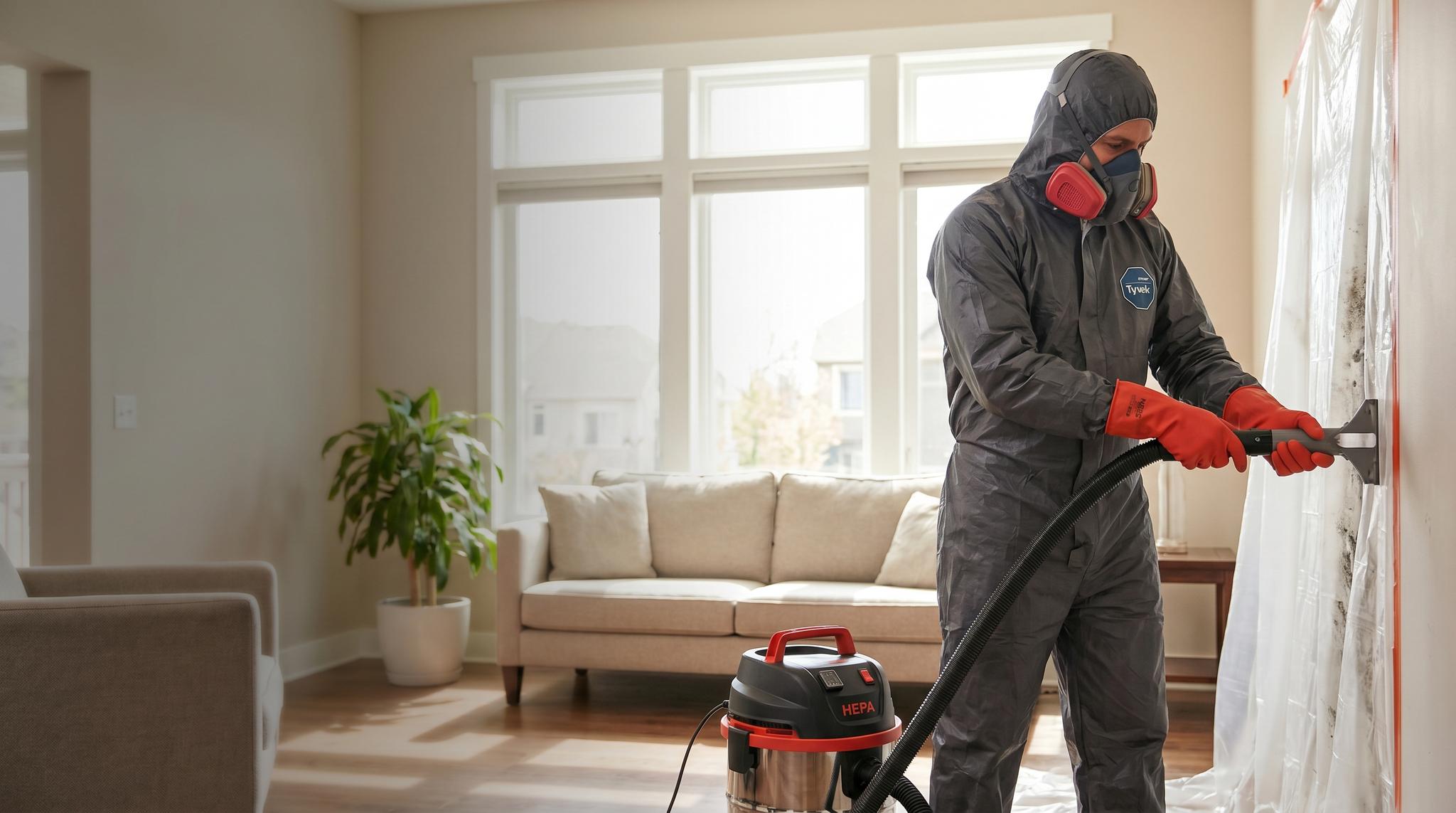
Also ask how they will protect the rest of your home. Proper jobs use plastic containment, sealed HVAC vents in the work zone, and decontamination procedures for workers and equipment.
Red Flags That Should End the Conversation
Be wary of anyone who quotes a price over the phone without seeing the property, pressures you to sign same-day, or leads with fear tactics about toxic black mold. Scare-based selling is the signature move of bad operators, and it spikes in Dallas after every major storm season.
Avoid companies that propose fogging or spraying as the primary treatment. Spraying biocide over mold without removing affected materials leaves dead spores and allergens in place and does nothing about the moisture source.
No written scope, no references, cash-only discounts, or a refusal to allow independent clearance testing are all deal-breakers.
Compare Quotes on Scope, Not Just Price
Get at least two quotes for any significant job. Put them side by side and compare containment plans, square footage of material removal, equipment used, and what verification is included. The cheapest quote often excludes clearance testing or rebuild.
Ask each company what happens if post-remediation testing fails. Reputable firms return and re-clean at no charge until the area passes.
Finally, check how long they have operated in the Dallas area and whether they carry general liability and pollution liability insurance. Mold work without pollution coverage leaves you exposed if something goes wrong.
Need a hand?
Our related services:
Frequently asked questions
Does the 25 square foot rule mean small jobs are unregulated in Texas?
Projects under 25 contiguous square feet are exempt from the licensing requirement, so homeowners or handymen can legally handle them. But the size refers to the actual contamination, which is often larger than what is visible, so an inspection is wise before assuming a job is small.
Should the same company test my home before and after remediation?
No. Texas requires the assessor and remediator to be independent for licensed projects, and the final clearance test should come from a third party. Independent verification is your proof the job was done right.